PERMOS
Swiss Permafrost Monitoring Network
The PERMOS Network
The Swiss Permafrost Monitoring Network documents the state and changes of mountain permafrost in the Swiss Alps. We collect field data on permafrost conditions in the framework of climate monitoring, which are openly available. PERMOS is carried by six academic partner institutions and financially supported by MeteoSwiss in the framework of GCOS Switzerland, the Federal Office for the Environment and the Swiss Academy of Sciences. The network is managed by the PERMOS Office.
Our locations
PERMOS observes permafrost conditions at 27 sites located between 2200 and 3500 m asl. in the Swiss Alps, which represent typical permafrost landforms: rock glaciers, debris and bedrock slopes or rock crests. Here, we measure ground temperatures in boreholes and at the surface, relative ground ice content and rock glacier velocities.
PERMAFROST – HIDDEN IN THE GROUND
Permafrost is an important phenomenon in cold regions at high latitude and high altitude. In mountain regions like the European Alps, permafrost is typically found above the tree line. It exists hidden in scree slopes, rock glaciers or steep rock walls.
Unlike glaciers, permafrost is not directly visible to us: permafrost is ground material that remains at or below 0 °C throughout the year. Permafrost is defined based on low ground temperatures, but practical relevance and the difference to non-permafrost also comes with the ice contained in the ground. Mountain permafrost is a climate indicator and it is relevant for landscape evolution, the construction of infrastructure or for slope stability.
What is permafrost?
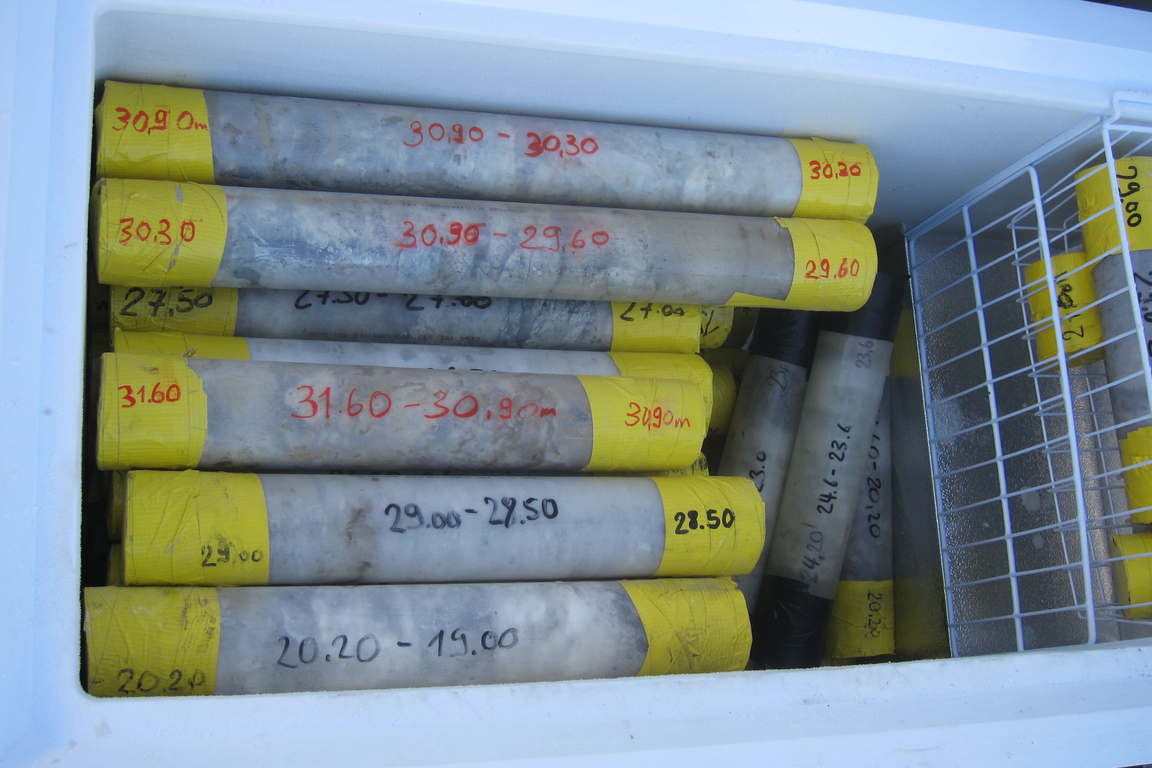
Permafrost is a key component of the cryosphere in cold polar and high-mountain regions. It is ground material with a maximum temperature of 0 °C for at least two years, in most cases for long time periods and reaching considerable depths. Ground ice content in permafrost regions is highly variable: In loose sediments we can find massive ice lenses tens of meters thick, while in bedrock permanent ice may be only present in rock pores and joints.
Where is permafrost in the Swiss Alps?
In the Swiss Alps, permafrost is generally found in vegetation-free areas above 2600 m asl. in bedrock, scree slopes, rock glaciers, or moraines. Permafrost is estimated below 3–5% of the area of Switzerland. The distribution of permafrost depends on climatic conditions, the surface and subsurface characteristics, and the local snow conditions. Unlike in the polar tundra regions, the lower summer temperatures and bedrock or scree surfaces in mountain regions hardly allow for any vegetation to grow.
Why does permafrost matter?
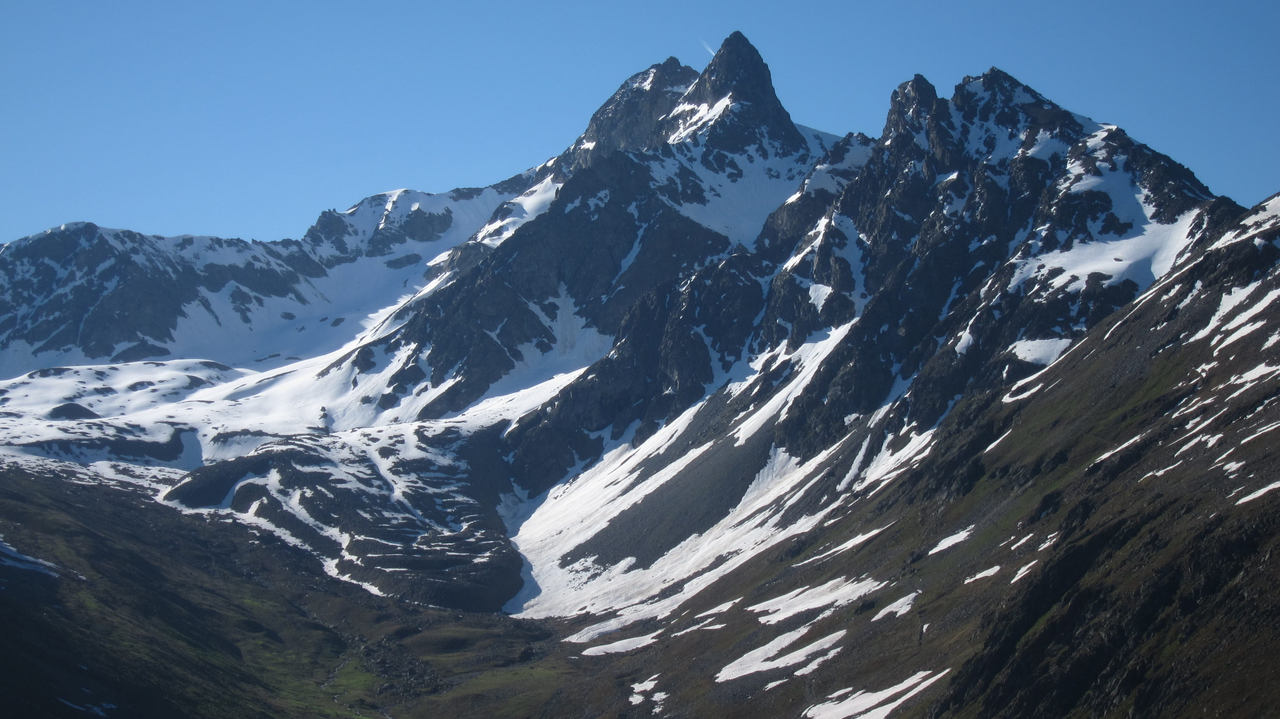
In high mountain regions like the European Alps, permafrost is relevant for the evolution of the landscape, the construction and maintenance of infrastructure and for natural hazards. Permafrost was selected as one of the 54 Essential Climate Variables (ECVs) of the Global Climate Observing System (GCOS): The ECVs are the group of variables that critically contributes to the characterization of the climate.
How can permafrost be observed?
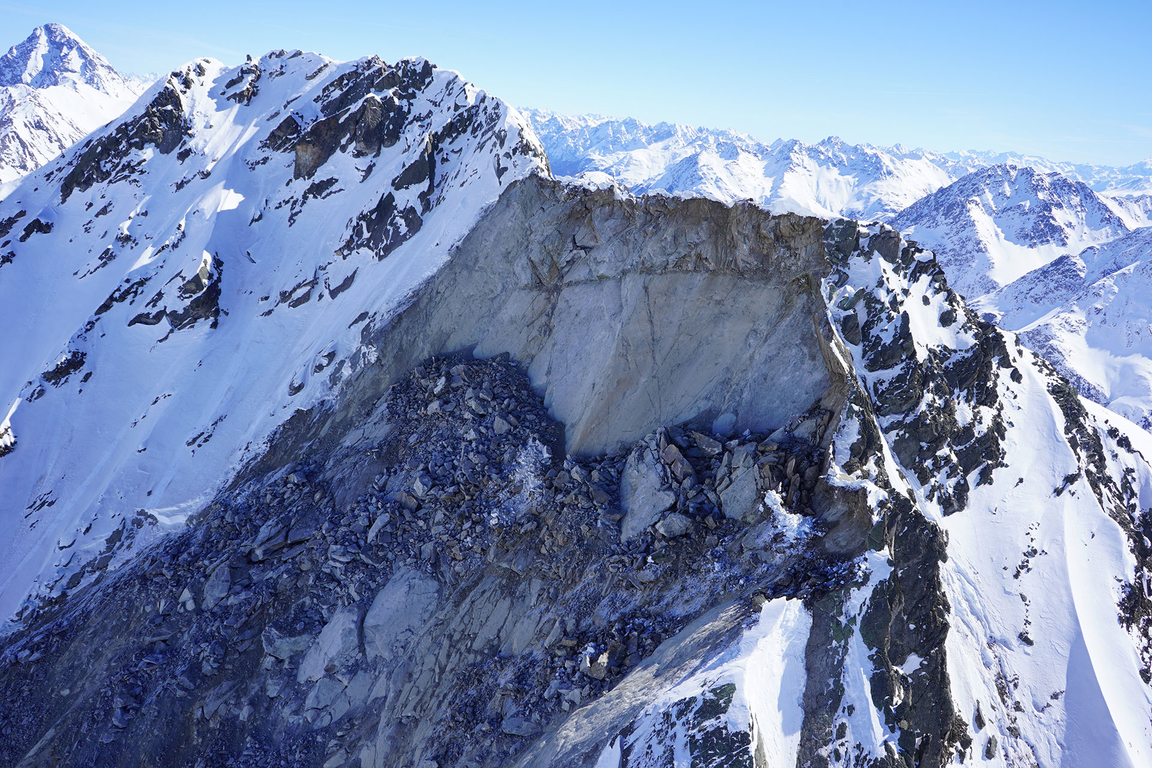
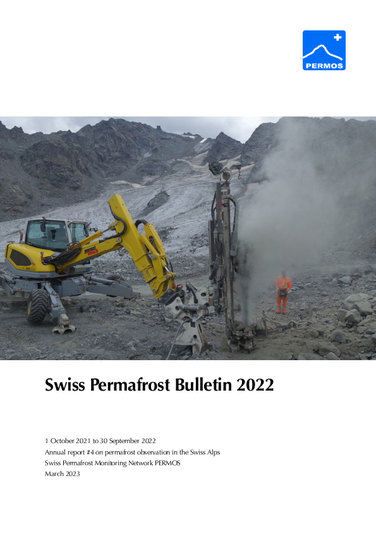
Permafrost is hidden from direct visual observation and we therefore rely on field measurements. The main method for direct permafrost observation is the measurement of ground temperatures in boreholes. Indirect geophysical methods are suitable to detect ground ice distribution and its changes. Geodetic surveys allow to determine how fast permafrost landforms are moving or subside. Also analyses of air photos and satellite images are becoming more and more important for the monitoring of permafrost creep.
What is a rock glacier?
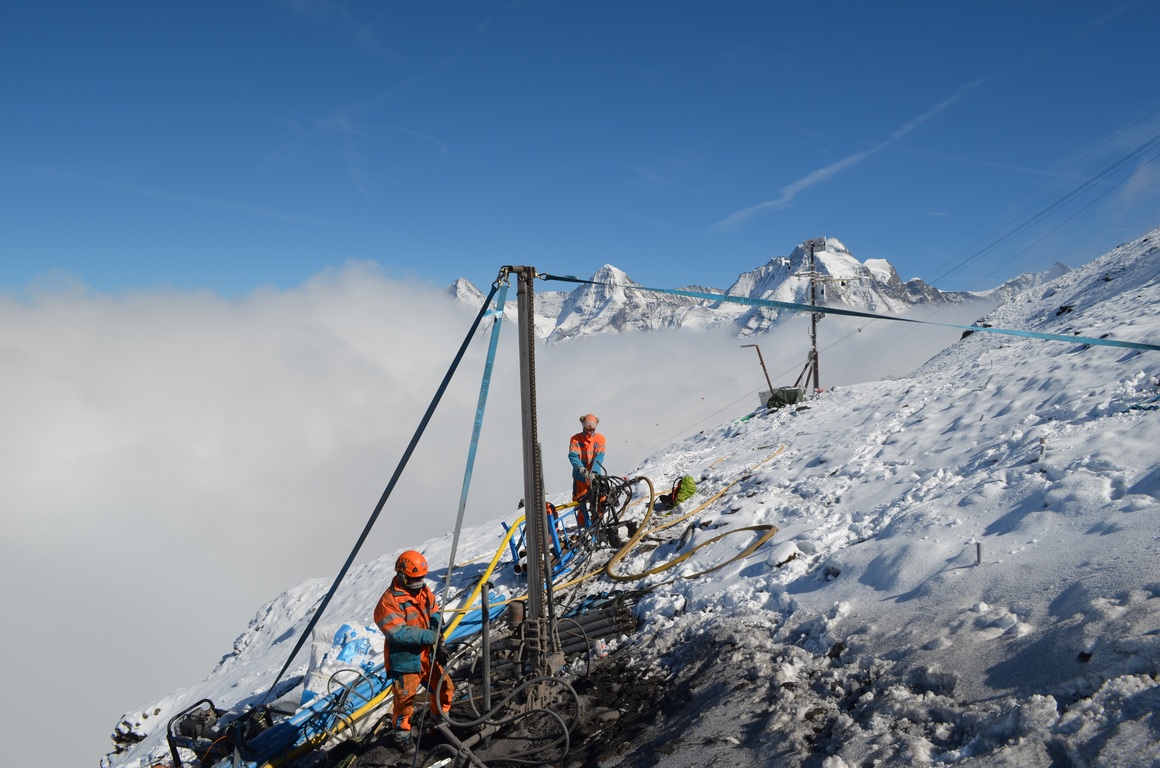
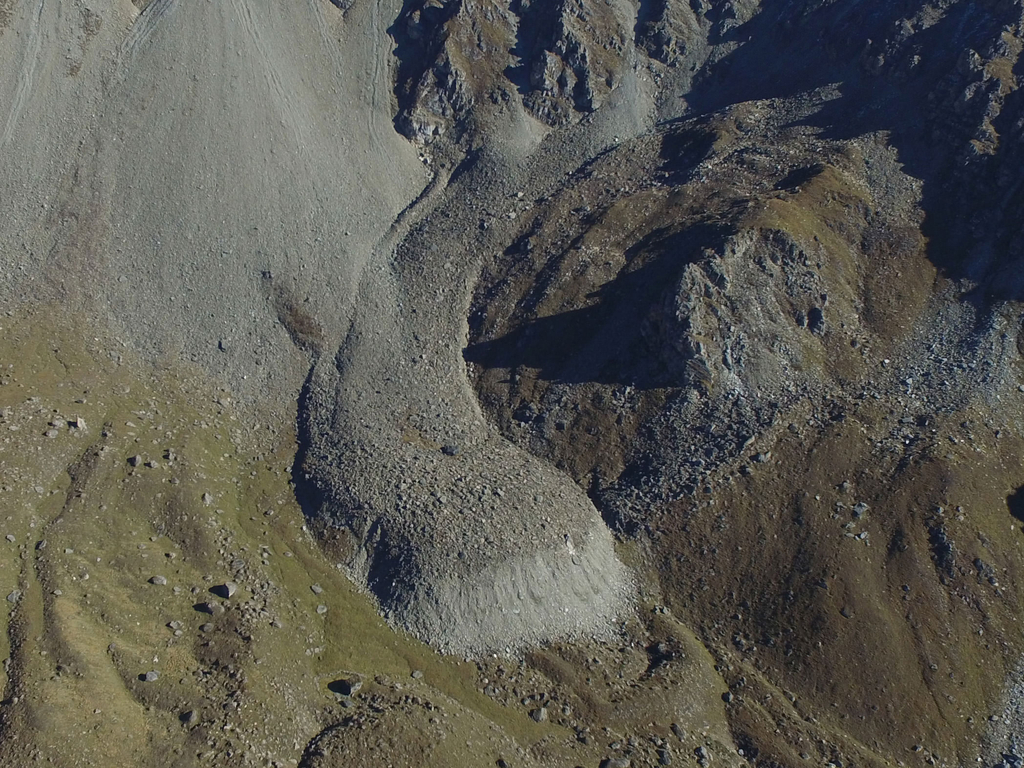
Rock glaciers are geomorphological landforms in mountain regions and indicate permafrost occurrence. They are composed of a mixture of ice, debris and blocks and creep downslope, building tongue shaped landforms with a steep front, lateral margins and ridge-and-furrow surface topography – they are not actually glaciers! The surface velocity of alpine rock glaciers varies between decimeters and a few meters per year and increases with increasing permafrost temperature.
Activities
PERMOS has evolved over more than 20 years since its start and still does. The network and its collaborators are active in climate monitoring and permafrost research, both nationally and internationally. Check out our most recent activities below.

DID YOU OBSERVE A ROCK FALL IN THE SWISS HIGH MOUNTAINS?
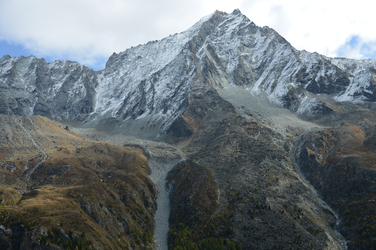
In the framework of PERMOS, we document rock fall events in the Swiss Alps that originate from permafrost slopes. To collect as many data as possible, you can help! Please report your observations via the questionnaire of the SLF or the MountaiNow App! Thank you for you contribution!
FAQ
Find answers to the frequently asked questions – FAQs – about who we are, what we measure and what we observe. Detailed information is also availble in our reports and publications, as well as from the PERMOS Office and all our partner institutions.
The Swiss Permafrost Monitoring Network PERMOS is in charge of collecting and curating data on mountain permafrost in the Swiss Alps to document its state and changes in the context of climate change. PERMOS is run by a coordination office – the PERMOS Office – and measurements are performed by seven academic partners (ETH Zurich, SUPSI, Universities of Fribourg, Innsbruck, Lausanne, and Zurich, WSL Insitute for Snow and Avalanche Research SLF). PERMOS is financially supported by MeteoSwiss in the framework of GCOS Switzerland, the Federal Office for the Environment (FOEN), and the Swiss Academy of Sciences (scnat).
The assessment of permafrost state and changes by PERMOS is based on in-situ measurements. The basis is the continuous recording of ground temperatures in boreholes and near the surface. Changes in ground ice content can be assessed using repeated geophysical soundings (geoelectric measurement to obtain permafrost resistivities). Geodetic surveys allow to determine how fast rock glaciers creep downslope.
All data measured in the framework of PERMOS can be visualized and downloaded via the data portal. All our data are open access under the requirement of correct citation according to the PERMOS data policy. If you have questions, please feel free to contact the PERMOS Office or the partner responsible for the measurement series.
The data obtained in the framework of PERMOS in the past 2 decades clearly point to a general warming of permafrost in the Swiss Alps, particularly in the past 10 years. The three main variables observed show a consistent picture: permafrost temperatures are increasing, ground ice content is decreasing, and rock glacier creep velocities are increasing. Temporary short-term variations to the long-term warming trend are also observed. For example a 2-year cooling period due extremely late arrival of the winter snow cover. These, however, do not reverse the long-term trend.
Permafrost warming and thaw influence the stability of steep and perennially frozen bedrock slopes. A change in frequency and magnitude of rock fall from warming permafrost slopes is expected based on laboratory studies and process understanding. However, a statistical analysis of the rock fall events is difficult because the documentation cannot considered to be complete. In addition to a potential increased due to permafrost warming, increased human activities in high mountain regions as well as awareness of the topic also result in more reported events.
Permafrost distribution in polar regions generally depends on the latitude: the higher the latitude, the colder and the more continuous the permafrost. Permafrost is underlying large areas and can reach down to depth of several kilometers. Polar permafrost often occurs in organic rich soil covered by vegetation and contains large amounts of greenhouse gases. In mountain regions, however, the distribution of permafrost is more complex and strongly driven by topography: colder and more permafrost at higher elevations and a significantly higher permafrost limit in south facing slopes compared to north facing slopes. Mountain permafrost is typically discontinuous, a few ten to a few hundred meters deep and spatially highly variable. Mountain permafrost occurs in unconsolidated debris slopes or bedrock. Because of these differences, there are also some differences in observation methods and impacts related to permafrost warming.
You did not find the answer to your questions? Browse the information and publications provided here on our website or contact us via the email-form you can find below!